
Gwanghwamun Square
Gwanghwamun Square is one of the most recognizable public spaces in central Seoul and an important starting point for travelers exploring the historic heart of the city. Located directly in front of Gwanghwamun Gate and Gyeongbokgung Palace, the square brings together Joseon Dynasty history, modern Seoul, public art, green spaces, museums, cultural venues, and some of the city’s most recognizable landmarks.
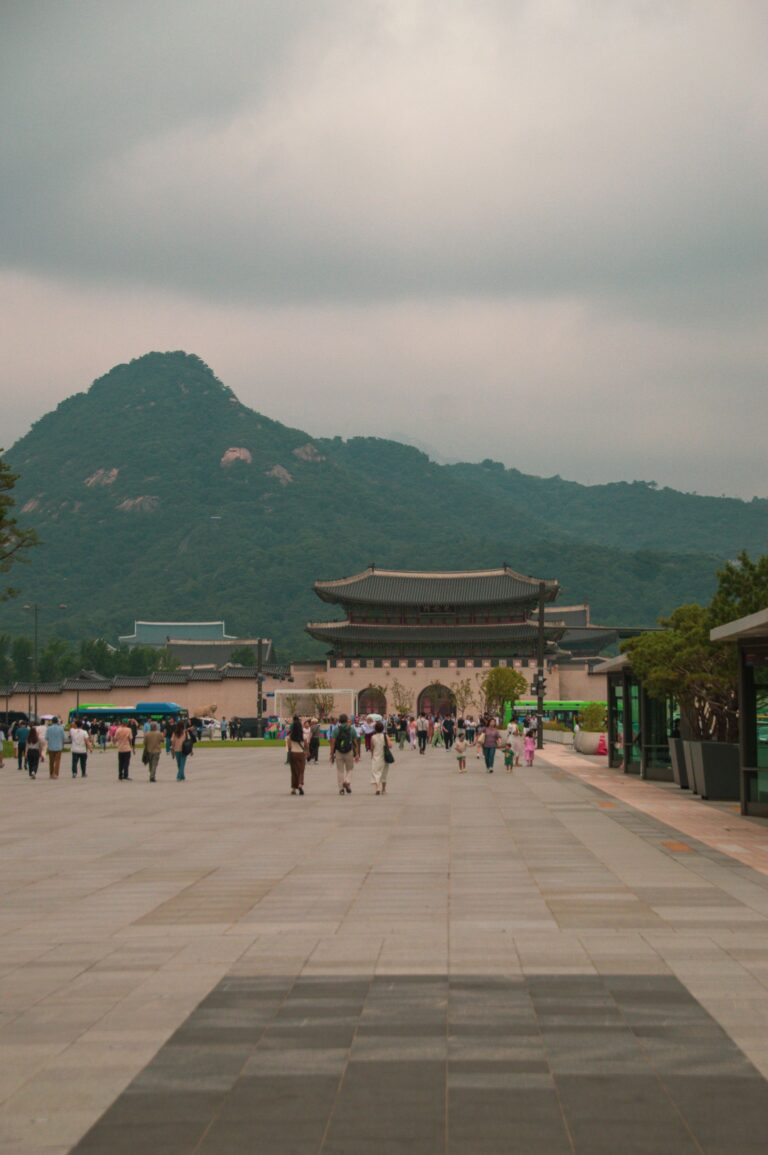
For first-time visitors, Gwanghwamun Square is more than a place to take a photograph in front of the statue of King Sejong. It is a convenient starting point for exploring several major Seoul attractions on foot. Gyeongbokgung Palace, Bukchon Hanok Village, Insadong, Cheonggyecheon Stream, and other central Seoul destinations can all be connected to a visit here.
The square was redesigned and reopened in 2022 as a larger, greener public space. Today, it combines historical elements with gardens, walking areas, water features, cultural facilities, and spaces where visitors can stop and rest. Seoul’s official tourism information describes Gwanghwamun Square as a place where history, culture, and relaxation come together.
Why Visit Gwanghwamun Square?
Gwanghwamun Square occupies a historically important location in Seoul.
During the Joseon Dynasty, the area in front of Gyeongbokgung Palace was associated with major government offices and the central administrative area of the capital. The historic street was known as Yukjo Street, or the Street of the Six Ministries.
The modern square preserves the connection between this historical landscape and contemporary Seoul.
Standing in the square, visitors can look toward Gwanghwamun Gate and Gyeongbokgung Palace while also seeing the modern buildings of central Seoul. This contrast between the old city and the modern capital is one of the most interesting features of the area.
The square is also convenient because you do not need to purchase an admission ticket simply to walk through the public square. Official Seoul tourism information currently lists Gwanghwamun Square as open throughout the year and free to enter.
Gwanghwamun Gate
Gwanghwamun Gate is the main southern gate of Gyeongbokgung Palace and provides the historic backdrop for the square.
Although the palace and square are separate attractions, they are closely connected geographically and historically.
One of the best ways to experience the area is to stand in the square and look north toward the gate. Behind Gwanghwamun, Bugaksan Mountain provides another layer to the traditional Seoul landscape.
If you are visiting Gyeongbokgung Palace, it makes sense to include Gwanghwamun Square before or after your palace visit rather than treating the two destinations as completely separate stops.
Statue of King Sejong the Great
The large statue of King Sejong is one of the most recognizable landmarks in Gwanghwamun Square.
King Sejong is particularly remembered for his role in the development of Hangul, the Korean alphabet.
The statue provides an opportunity to learn about one of the most influential figures in Korean history, and visitors can also access the underground Story of King Sejong exhibition area beneath the square.
The Story of King Sejong exhibition introduces his achievements and uses interactive content to help visitors understand his historical contribution. Official tourism information identifies access points near the Sejong Center for the Performing Arts and around the King Sejong statue.
For travelers interested in Korean history, this can be a useful addition to a walk around the square.
Statue of Admiral Yi Sun-sin
Another major landmark is the statue of Admiral Yi Sun-sin.
Yi Sun-sin is one of the best-known military figures in Korean history, and his statue has become an important landmark in central Seoul.
The statue is located toward the southern section of the square, creating a natural walking route between the Admiral Yi Sun-sin area and the King Sejong area.
Walking between the two statues gives visitors an easy introduction to several historical themes without needing to enter a museum.
History Waterway and Four Seasons Garden
Gwanghwamun Square is not only about statues and historical monuments.
The redesigned square includes green areas, gardens, walking spaces, and water features.
The History Waterway is designed to connect the modern square with stories from Seoul’s past. The Four Seasons Garden provides greenery and a place to slow down during a busy sightseeing day.
These areas are especially useful for travelers who want to take a break between major attractions.
Instead of moving immediately from one tourist attraction to another, you can use the square as a place to sit, walk, take photographs, or simply observe everyday life in central Seoul.
Garden of Gratitude
One of the most important recent additions to Gwanghwamun Square is the Garden of Gratitude, completed in 2026.
The space was created to express gratitude toward Korean War veterans and to reflect on the values of freedom and peace.
Its above-ground installation, Lights of Gratitude 23, consists of 23 symbolic sculptures representing the participating nations associated with the Korean War. The project also includes an underground multimedia space called Freedom Hall.
This makes the current Gwanghwamun experience different from descriptions of the square written several years ago.
According to current official information, the outdoor sculptures are open at all times, while the lighting installation operates from 20:00 to midnight. Freedom Hall currently has separate operating hours, with longer hours from Friday through Sunday.
Because these facilities are relatively new, travelers should check the latest official information before planning a visit specifically around the Garden of Gratitude or Freedom Hall.
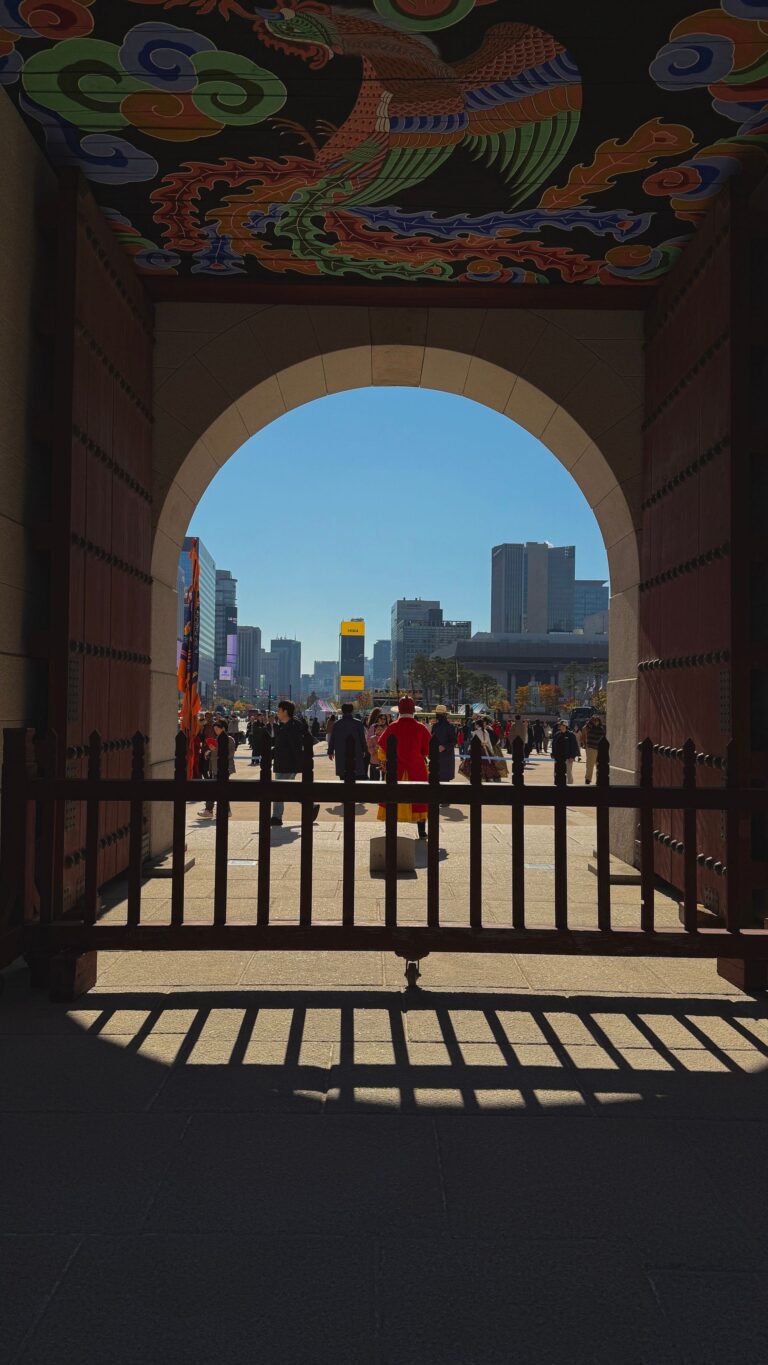
Haechi Madang
Haechi Madang connects Gwanghwamun Station with Gwanghwamun Square.
It is more than simply a passage between the subway station and the surface. The area includes a large media wall where visitors can experience media-art exhibitions.
The current official tourism information lists Haechi Madang as operating daily from 08:00 to 22:00, with free admission.
This can be particularly interesting for visitors arriving by subway because it provides an easy transition from the underground station to the square.
How Long Should You Spend at Gwanghwamun Square?
A quick visit can take around 30 to 45 minutes.
This is enough time to walk through the main area, see the King Sejong and Admiral Yi Sun-sin statues, photograph Gwanghwamun Gate, and continue to your next destination.
For a more relaxed visit, allow approximately 1 to 1.5 hours.
If you want to explore the Garden of Gratitude, Haechi Madang, Story of King Sejong, gardens, and surrounding cultural attractions, you may want to spend longer.
Gwanghwamun Square is also suitable for a longer walking itinerary because several major attractions are located nearby.
Best Time to Visit
There is no single best time for everyone.
During the daytime, the square is useful for sightseeing and photography. The historical relationship between Gwanghwamun Gate, Gyeongbokgung Palace, and the square is easiest to understand in daylight.
Late afternoon can be a good time to begin a walking route because you can experience the area as the city transitions from daytime to evening.
At night, the atmosphere changes considerably. The surrounding buildings, palace area, square, and lighting installations create different photographic opportunities.
The current Garden of Gratitude lighting installation is scheduled for 20:00–24:00, making evening visits particularly relevant for travelers interested in seeing that part of the square.
However, always check the latest operating information before making a special trip for a particular exhibition or lighting display.
Getting to Gwanghwamun Square
The easiest way for many international visitors to reach Gwanghwamun Square is by Seoul Subway Line 5.
Gwanghwamun Station provides direct access to the square, and official Seoul tourism information currently lists Exit 2 as approximately 235 meters from the square.
Haechi Madang also provides a connection between the subway station and the square, with Exit 9 located very close to Haechi Madang.
If you are already visiting Gyeongbokgung Palace, you can also walk south from the palace toward Gwanghwamun Gate and enter the square from the northern side.
This makes it easy to combine the two destinations.
Gwanghwamun Tourist Information Center
If you need assistance while exploring central Seoul, the Gwanghwamun Tourist Information Center is located nearby.
The center provides travel information, interpretation services, reservation assistance, maps, and guidebooks. English, Chinese, and Japanese language assistance is available according to the official Seoul tourism listing.
The currently listed address is 211 Sejong-ro, Jongno-gu, and the tourism listing places it near Gwanghwamun Station Exit 6.
Because information-center hours can change, check the latest official listing before visiting specifically for assistance.
Practical Information
Location: 172 Sejong-daero, Jongno-gu, Seoul
Nearest subway: Gwanghwamun Station, Seoul Subway Line 5
Admission: Free for the public square
Square opening: Open 24 hours according to the current official Seoul tourism listing
Recommended visit: 30 minutes to 1.5 hours
Best for: History, photography, walking, Korean culture, city sightseeing, night views
Nearby attractions: Gyeongbokgung Palace, Bukchon Hanok Village, Insadong, Cheonggyecheon Stream, Sejong Center for the Performing Arts
The public square itself is listed as open year-round, but individual exhibitions, facilities, media installations, and special programs may have separate operating hours.
A Practical Gwanghwamun Walking Route
For a first visit, a simple route can start at Gwanghwamun Station.
Gwanghwamun Station → Haechi Madang → Admiral Yi Sun-sin Statue → King Sejong Statue → History Waterway → Garden of Gratitude → Gwanghwamun Gate → Gyeongbokgung Palace
This route lets you gradually move from the modern subway system into the historic palace district.
If you want to continue sightseeing after Gyeongbokgung, you can then move toward Bukchon Hanok Village or Insadong.
Another option is to finish your Gwanghwamun visit by walking south toward Cheonggyecheon Stream.
This creates a longer central Seoul walking route without requiring several subway journeys.
Gwanghwamun and Gyeongbokgung Together
For first-time visitors to Seoul, combining Gwanghwamun Square and Gyeongbokgung Palace is particularly practical.
Start at Gwanghwamun Square and explore the main landmarks before entering the palace through Gwanghwamun Gate.
Inside Gyeongbokgung, you can continue to Geunjeongjeon Hall, Gyeonghoeru Pavilion, Hyangwonjeong Pavilion, and other palace buildings.
After leaving the palace, continue toward Bukchon Hanok Village or Insadong.
This gives you a route that combines major historical landmarks with traditional neighborhoods.
Gwanghwamun and Cheonggyecheon
Another useful combination is Gwanghwamun Square and Cheonggyecheon Stream.
After exploring the square, walk south toward the stream and continue along the water.
Cheonggyecheon provides a completely different environment from the large open square. The combination allows travelers to experience both a major urban public space and a linear stream-side walking environment within the same central Seoul itinerary.
If you are traveling in the evening, this can also be a pleasant way to continue sightseeing after the daytime attractions.
Travel Tools: How to Use Seoul Travel Tips at Gwanghwamun
Gwanghwamun is an ideal location for using the travel tools on Seoul Travel Tips because many travelers change destinations several times while exploring this area.
Global ATM Finder
If you need Korean won during your Seoul trip, use the Global ATM Finder to locate ATMs around the area.
This can be useful before starting a longer walking route toward Gyeongbokgung, Bukchon, or Insadong.
When using an ATM, carefully check the displayed exchange-rate and fee information before confirming the transaction.
If the ATM offers a choice between Korean won and your home currency, review the conversion option carefully before proceeding.
Subway Route Finder
Gwanghwamun Station is on Seoul Subway Line 5, making it a useful starting point for reaching other parts of Seoul.
After visiting the square, you might continue to Hongdae, Dongdaemun, Myeongdong, Yongsan, or another destination.
Use the Seoul Subway Route Finder to check the route before boarding.
Pay particular attention to the transfer station and the number of transfers required.
This is especially helpful for travelers who are unfamiliar with Seoul’s subway network.
Seoul Travel OCR
Gwanghwamun and the surrounding streets contain Korean signs, restaurant names, addresses, exhibition information, and other text that international travelers may not be able to read.
If you encounter Korean text that you need to understand, use Seoul Travel OCR to capture the text with your phone.
For example, you might photograph a Korean restaurant name or address and use the recognized information to continue searching or locating the place on a map.
This can be particularly useful once you leave the major tourist areas and begin exploring smaller streets around Jongno.
Map Connection
After deciding where you want to go next, use the map connection provided by Seoul Travel Tips to continue with your preferred map service.
For example:
Gwanghwamun Square → Gyeongbokgung Palace
Gwanghwamun Square → Bukchon Hanok Village
Gwanghwamun Square → Insadong
Gwanghwamun Square → Cheonggyecheon Stream
Instead of trying to remember the route from a static webpage, open the map and follow the current walking directions.
Tips for First-Time Visitors
Gwanghwamun Square is larger than it may appear in photographs, so wear comfortable shoes if you plan to combine it with Gyeongbokgung and Bukchon.
During summer, Seoul can be hot and humid. Take advantage of shaded areas and indoor facilities when necessary.
During winter, prepare for cold temperatures because much of the experience takes place outdoors.
If photography is important to you, visit at more than one time of day if your itinerary allows. Daytime provides clear views of the architecture and monuments, while evening creates a different atmosphere through city lighting.
If you specifically want to visit Freedom Hall or see the Garden of Gratitude lighting installation, check the current official schedule before going.
Finally, remember that Gwanghwamun Square is not simply a photo stop. Take time to understand the historical relationship between the square, Gwanghwamun Gate, Gyeongbokgung Palace, and the central government district of historic Seoul.
Why Gwanghwamun Square Should Be on Your Seoul Itinerary
Gwanghwamun Square is one of the easiest places in Seoul to experience the relationship between Korea’s past and present.
Within a relatively small area, you can see Gwanghwamun Gate, Gyeongbokgung Palace, the statues of King Sejong and Admiral Yi Sun-sin, modern Seoul architecture, gardens, public art, cultural facilities, and the recently established Garden of Gratitude.
Its direct subway connection also makes it practical for travelers.
Rather than visiting Gwanghwamun only to take a photograph, consider using it as the starting point for a larger walking route through central Seoul.
From here, you can continue to Gyeongbokgung, Bukchon, Insadong, Cheonggyecheon, or other nearby destinations.
With a subway route, map connection, ATM information, and Seoul Travel OCR available through Seoul Travel Tips, the page can also serve as a practical reference while you are actually traveling.
Before You Go
Check the latest official information for special events and temporary changes.
Wear comfortable shoes.
Bring water during hot weather.
Check the Garden of Gratitude and Freedom Hall schedule if you plan to visit those facilities.
Use the Seoul Subway Route Finder before traveling to your next destination.
Use the Global ATM Finder if you need cash.
Use Seoul Travel OCR when you encounter Korean text that you cannot read.
Use the map connection to continue your walking route.
Most importantly, allow yourself time to experience the square rather than simply passing through it.
Gwanghwamun Square is one of the places where Seoul’s history and modern city life meet most visibly. For travelers exploring central Seoul for the first time, it can be both a destination in its own right and a convenient starting point for discovering the historic heart of the city.
🧭 Useful Seoul Travel Tools
Make your visit easier with our free travel tools.