
Bukchon Hanok Village: Visiting Hours, Rules and Best Walking Route (2026)
Last updated: October 2026 · Written by the Seoul Travel Tips team, based in Seoul
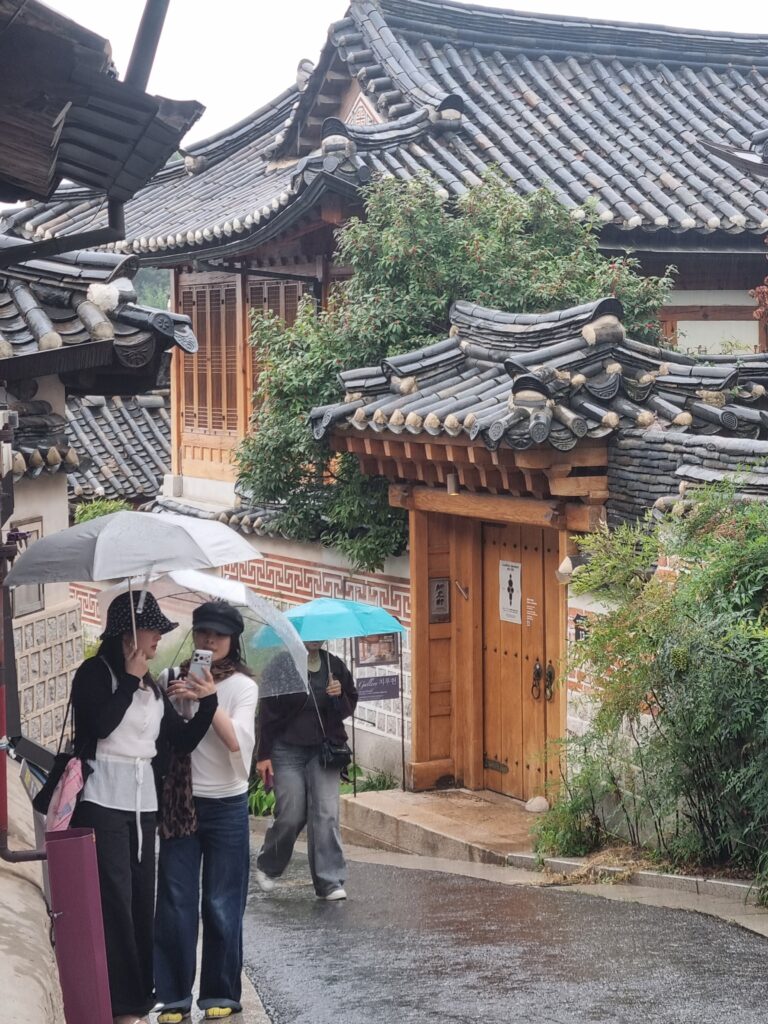
Bukchon is a hillside neighborhood of traditional Korean houses (hanok) between Gyeongbokgung and Changdeokgung palaces. Its tiled rooftops, narrow stone alleys and views over the city make it one of Seoul’s most photographed places. But Bukchon is not a museum — people live here, and since 2025 the busiest streets have restricted visiting hours with fines for tourists who ignore them. Read this before you go.
Quick Facts
| Visiting hours (Red Zone) | 10:00–17:00 only. Tourists may not enter from 17:00 to 10:00 the next morning |
| Fine | Up to ₩100,000 for entering restricted streets outside visiting hours |
| Admission | Free to walk the neighborhood |
| Subway | Anguk Station, Line 3, Exits 2 or 3 |
| Time needed | 1–2.5 hours |
| Best for | Traditional architecture, photography, quiet walks |
Visiting Rules You Must Know
To protect residents from overtourism, Seoul designated Bukchon a Special Management Area. It is divided into zones:
- Red Zone — the core hanok alleys around Gahoe-dong, including the most famous photo streets. Tourists are banned from 17:00 to 10:00.
- Orange Zone — streets with intensive guidance and patrols.
- Yellow Zone — streets under monitoring.
Signs on the streets mark the restricted areas. Plan to be in the Red Zone between 10:00 and 17:00, and don’t schedule Bukchon as an evening stop.
Practice “Silent Tourism”
Seoul asks visitors to:
- Keep your voice down — sound carries in narrow alleys.
- Never photograph or film inside homes, through doors or over walls.
- Don’t sit on doorsteps or block residents’ entrances.
- Keep groups small and leave no litter.
- No loudspeakers or microphones (tour guides included).
The same rules apply when you visit in hanbok.
What to See
The Hanok Alleys of Gahoe-dong
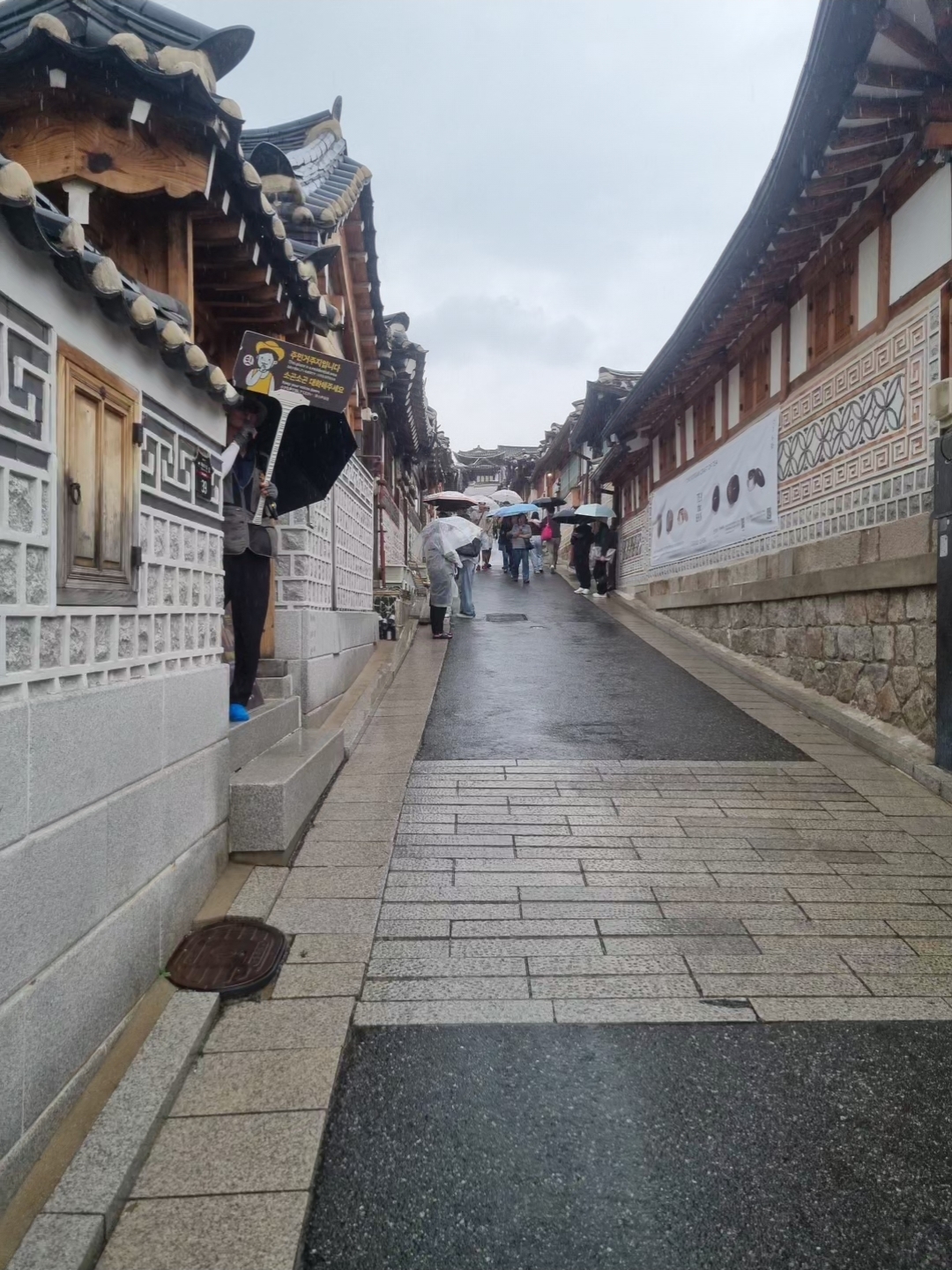
The most famous view in Bukchon is the downhill alley in Gahoe-dong (around Bukchon-ro 11-gil), where rows of tiled roofs step down toward the towers of downtown Seoul. It is steep, narrow and often busy — go as early after 10:00 as you can.
Bukchon’s Eight Views
Small markers around the neighborhood point out eight classic viewpoints, from rooftop panoramas to quiet stone stairways. Following them is an easy way to explore beyond the one famous street.
Bukchon Traditional Crafts Center
Watch artisans at work and try short craft programs such as hanji (traditional paper) making. Entry is free; activities cost around ₩5,000–15,000.
Bukchon Village Information Center
At 48 Bukchon-ro 5-gil, staff provide maps and help in English, Chinese and Japanese, and there is free Wi-Fi. Open 9:00–18:00, closed Sundays.
Jeongdok Public Library and Baek In-je’s House Museum
The library’s garden is a peaceful stop, especially in cherry blossom season. Baek In-je’s House is a rare chance to see inside a large early-20th-century hanok residence. Check opening days before you go.
Best Walking Route
| Step | Stop | Time |
|---|---|---|
| 1 | Anguk Station Exit 2 | Start at 10:00 |
| 2 | Bukchon Village Information Center — pick up a map | 10 min |
| 3 | Uphill to the Gahoe-dong alleys and viewpoints | 45 min |
| 4 | Follow the Eight Views markers west | 30 min |
| 5 | Down into Samcheong-dong for cafes and galleries | 30 min |
| 6 | Continue to Gyeongbokgung Palace or downhill to Insadong | — |
Alternative: start at Changdeokgung Palace in the morning, walk west through Bukchon at midday, and finish at Gyeongbokgung.
Bukchon is steep in places. Wear comfortable shoes and take breaks in Samcheong-dong’s cafes on the way down.
Getting There
Anguk Station (Line 3): Exits 2 and 3 both lead uphill into Bukchon in about 5–10 minutes. From Gyeongbokgung Palace, it’s about a 15-minute walk east.
Photography Tips
- Morning light just after 10:00 gives soft shadows on the rooftops and fewer crowds.
- Photograph rooflines, walls and street views — not doorways, windows or residents.
- Don’t stand in the middle of narrow alleys for long; let residents and others pass.
- A wide-angle or phone’s 0.5× lens helps in tight lanes.
Seasons
- Spring: flowers in gardens and around Jeongdok Library.
- Summer: green and lush, but the hills are hot — go at 10:00 sharp.
- Autumn: clear skies and colorful leaves against tiled roofs; the best time to visit.
- Winter: crisp mountain views and occasional snow on the roofs.
Seoul also holds Seoul Hanok Week in autumn, with exhibitions, tours and craft programs across Bukchon and Seochon. Check the official program if your trip falls in early October.
Nearby
- Gyeongbokgung Palace — 15 minutes west
- Changdeokgung Palace — next to Anguk Station
- Insadong — 10 minutes south for tea houses and crafts → Jongno and Insadong guide
- Ikseon-dong — hanok cafes and restaurants, 15 minutes southeast
FAQ
Can I visit Bukchon in the evening? Not the Red Zone. The core alleys are closed to tourists from 17:00 to 10:00. Visit in the daytime and spend your evening in Insadong or Ikseon-dong instead.
Is Bukchon open on Sundays? You can walk the streets every day within visiting hours, but some facilities, such as the information center, close on Sundays.
Can I go inside the hanok? Not private homes. You can enter public facilities such as the Crafts Center and museums, or stay overnight in a licensed hanok guesthouse.
Related Guides
→ 3-day itinerary · Must-visit places · Walking Helper
Visiting rules and facility hours can change. We check this page regularly, but please follow the signs and official guidance on the day.
A Local’s Note
Bukchon Hanok Village: How I’d Explore It
If you want to see all of Bukchon Hanok Village, it’s important to find the right starting point. That way, you can follow the viewpoints in order, from Spot 1 through Spot 8. I recommend starting from Exit 3 of Anguk Station. Exploring the village takes about two hours.
Please don’t forget that this is a residential neighborhood where people actually live.
As mentioned above, visits to the key areas are restricted after 5 p.m., so to see everything, you should arrive by 3 p.m. at the latest. There are lots of steep uphill slopes and narrow alleys, so I recommend visiting without heavy bags and in comfortable clothes.
Lots of visitors walk through every day, so if you just follow the flow of other travelers, you’ll find the main spots without much trouble. Take it slow, and enjoy the traditional Korean houses and the skyline created by their hanok rooftops as you explore.