
Jongno and Insadong, Seoul: Palaces, Hanok Streets and Tea Houses (2026 Guide)
Last updated: October 2026 · Written by the Seoul Travel Tips team, based in Seoul
Jongno is the historic heart of Seoul. For more than 600 years, since the Joseon Dynasty made Seoul its capital, this was where kings ruled, merchants traded and scholars lived. Today it holds two of the city’s five royal palaces, a royal shrine, the hanok neighborhoods of Bukchon and Ikseon-dong, the tea houses and craft shops of Insadong, and Gwangjang Market. If you want to see traditional Seoul, this is where you spend your days.
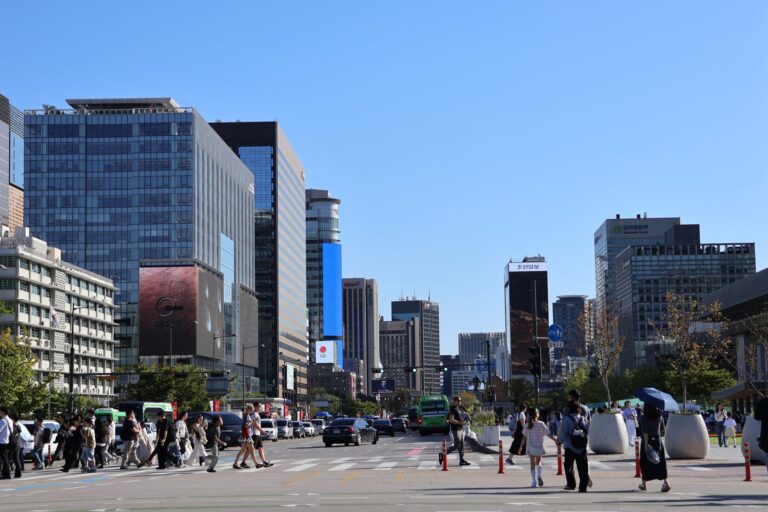
Jongno at a Glance
| Sight | What it is | Nearest station |
|---|---|---|
| Gyeongbokgung Palace | The main royal palace (closed Tuesdays) | Gyeongbokgung (Line 3), Exit 5 |
| Changdeokgung Palace | UNESCO palace with the Secret Garden (closed Mondays) | Anguk (Line 3), Exit 3 |
| Bukchon Hanok Village | Hillside hanok neighborhood (visiting hours 10:00–17:00) | Anguk (Line 3), Exits 2–3 |
| Insadong | Tea houses, galleries and craft shops | Anguk (Line 3), Exit 6 |
| Ikseon-dong | Hanok alleys turned into cafes and restaurants | Jongno 3-ga (Lines 1, 3, 5), Exit 4 |
| Jongmyo Shrine | UNESCO royal ancestral shrine | Jongno 3-ga, Exit 11 |
| Gwangjang Market | Seoul’s most famous food market | Jongno 5-ga (Line 1), Exit 8 |
| Gwanghwamun Square | Grand plaza in front of the palace | Gwanghwamun (Line 5) |
Insadong
Insadong is Seoul’s best street for traditional culture you can take home. The main street, Insadong-gil, and its side alleys are lined with shops selling ceramics, hanji paper goods, calligraphy brushes, tea sets and souvenirs, plus small galleries and traditional tea houses.
Don’t miss:
- Ssamziegil — a spiral, open-air shopping building where a gently sloping walkway winds past small craft and design shops.
- Traditional tea houses — try omija-cha (five-flavor berry tea) or yuja-cha (citron tea) with rice cakes in a hanok setting.
- Hotteok and dragon’s beard candy from street stalls.
- Sunday car-free street — on weekends the main road is often closed to cars, making it pleasant to stroll.
Most shops open around 10:00 and close by 20:00–21:00. It’s a good place for an afternoon after Bukchon, or for dinner after Changdeokgung.
Jongmyo Shrine
Jongmyo is the shrine where the spirits of Joseon kings and queens are honored. Its main hall, Jeongjeon, is one of the longest single wooden buildings in Asia, and its quiet, restrained architecture is very different from the colorful palaces. It is a UNESCO World Heritage Site, and the royal ancestral rite held here each May is listed as intangible heritage.
On most days, visits are by guided tour at set times in several languages; on Saturdays you can explore freely. Jongmyo is closed on Tuesdays. Admission is ₩1,000.
Ikseon-dong
A compact grid of 1920s-era hanok houses near Jongno 3-ga that has become one of Seoul’s most popular spots for cafes, dessert shops, small restaurants and photo studios. The lanes are very narrow and crowded on weekends, so try a weekday afternoon. → Ikseon-dong guide
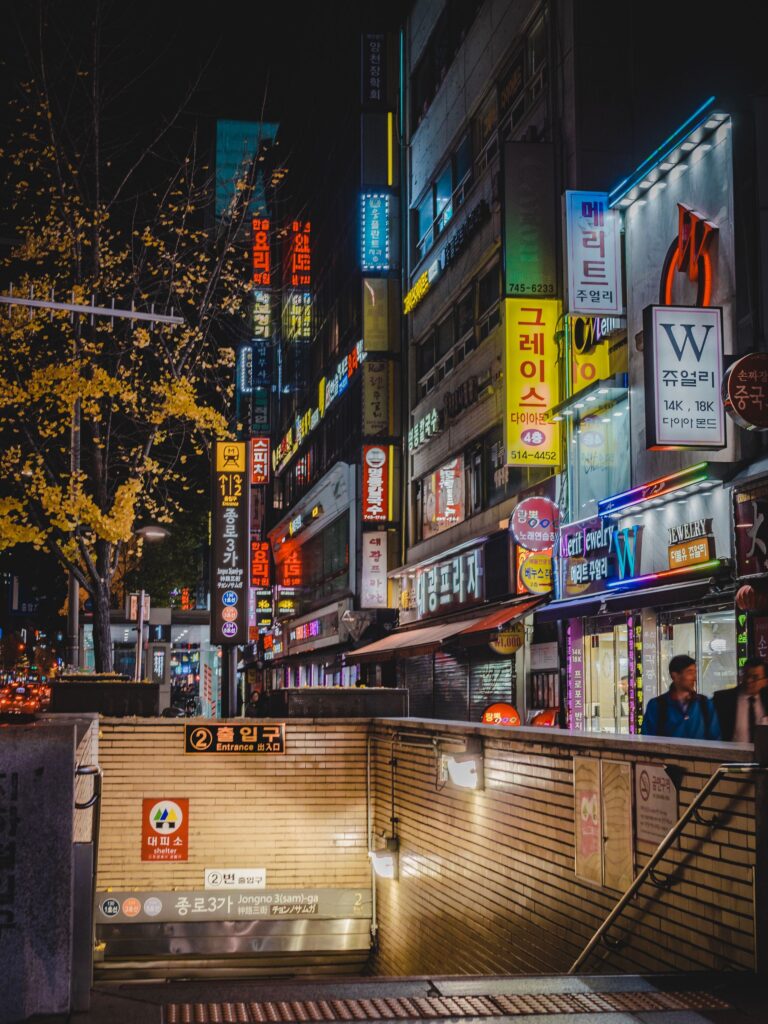
A One-Day Jongno Route
| Time | Stop |
|---|---|
| 9:00 | Gyeongbokgung — 10:00 guard ceremony |
| 11:30 | Walk east through Bukchon (after 10:00) |
| 13:00 | Lunch and tea in Insadong |
| 14:30 | Changdeokgung and the Secret Garden tour (book ahead) |
| 17:00 | Cafes and sunset in Ikseon-dong |
| 19:00 | Dinner at Gwangjang Market |
| 20:30 | Evening walk along Cheonggyecheon Stream |
Mind the closing days: Gyeongbokgung and Jongmyo close on Tuesdays; Changdeokgung closes on Mondays. On those days, swap the order or visit the other palace.
Getting Around
Jongno is easy to cover on foot — most sights are 10–20 minutes apart. Useful stations:
- Gyeongbokgung (Line 3) — for the palace and Seochon
- Anguk (Line 3) — for Bukchon, Insadong and Changdeokgung
- Jongno 3-ga (Lines 1, 3, 5) — for Ikseon-dong and Jongmyo
- Jongno 5-ga (Line 1) — for Gwangjang Market
→ Seoul Subway Route Finder · Walking Helper
Staying in Jongno
Jongno is a great base for culture lovers, with a central location, three subway lines at Jongno 3-ga and some guesthouses in restored hanok houses. It’s quieter at night than Myeongdong or Hongdae. → Where to stay in Seoul
Practical Tips
- Comfortable shoes — you’ll walk a lot, and Bukchon is hilly.
- Hanbok gets you free entry to the palaces and Jongmyo; rental shops cluster around Anguk and Gyeongbokgung stations.
- Cash is useful for street food and small shops. → Global ATM Finder
- Respect residents in Bukchon and Ikseon-dong — keep quiet in residential lanes.
Related Guides
→ 3-day itinerary · Must-visit places · Korean food guide
Opening days and hours change for holidays and events. Please check official information before visiting specific sites.
A Local’s Note
Jongno has the most sights in one place and lots of spots to try Korean food, which is why it’s the area I recommend most. For more details on the sights around Jongno, check out the attraction pages on our site (Gyeongbokgung Palace, Changdeokgung Palace, Bukchon Hanok Village, Cheonggyecheon Stream).
Personally, I love Insadong’s streets at night. If you’re exploring the Jongno area, I also recommend having dinner in Insadong and trying traditional Korean tea.